港股即時

Economic Calendar

Monday, September 26, 2016

引: U.S. workers unload first of Hanjin ships stalled by bankruptcy


U.S. workers unload first of Hanjin ships stalled by bankruptcy


A Hanjin Shipping Co ship is seen stranded outside the Port of Long Beach

A Hanjin Shipping Co ship is seen stranded outside the Port of Long Beach, California, September 8, 2016. REUTERS/Lucy Nicholson

By Lisa Richwine
LOS ANGELES (Reuters) - Dock workers began unloading furniture, clothing and other cargo on Saturday from a container ship owned by bankrupt Hanjin Shipping Co Ltd <117930.KS>, breaking a logjam that has stranded goods on a dozen vessels bound for the U.S. West Coast.
The Hanjin Greece docked at the Port of Long Beach in California early Saturday morning and workers were hauling off containers of products destined for U.S. retailers, labor union officials said.
But ending the Hanjin shipping crisis could be a protracted affair. Port operators, cargo owners, longshoremen, shippers and others all must reach financial agreements with Hanjin before each ship can be docked, officials said.
Two other ships owned by the South Korean shipper were anchored close to the Long Beach port but as of mid-day Saturday did not have orders to dock, according to the Marine Exchange of Southern California, a group that tracks cargo ship traffic. Union officials said nine others were floating in the Pacific.
Around $14 billion of cargo has been tied up globally as ports, tugboat operators and cargo handling firms refused to work for Hanjin, the world's seventh-largest container carrier, which filed for receivership in a Seoul court Sept. 4.
On Friday, courts in South Korea and the United States cleared the way for Hanjin to spend $10 million to unload cargo from four ships headed to the U.S. West Coast. And on Saturday, shareholder Korean Air approved a plan to provide 60 billion won ($54.16 million) to the troubled shipper.
While the unloading of the Hanjin Greece was underway, truck drivers had not yet been called in to transport the goods from the port for distribution to retailers, many of which are awaiting products for the busy holiday shopping season.
"At this moment, the drivers are still idle," Patrick Kelly, secretary-treasurer for Teamsters Local 952, said at a news conference on Saturday morning.
Once its unloaded, the Hanjin Greece will be reloaded with empty containers or with containers filled with goods for export, said Barbara Maynard, a spokeswoman for Justice for Port Drivers, a union organizing effort by the Teamsters' Port Division.
Union officials have voiced concern about the welfare of crew members on Hanjin ships stuck at sea. Initial checks with Hanjin Greece workers found they were in good condition, Maynard said. "The crew on that ship at least is doing OK," she said.
(Reporting by Lisa Richwine; Editing by Sue Horton and Mary Milliken)


Reference:

https://www.yahoo.com/news/u-workers-unload-first-hanjin-ships-stalled-bankruptcy-224934802--finance.html

引: 【航運版雷曼】韓進破產 HIT要櫃主多付數倍才卸貨

【航運版雷曼】韓進破產 HIT要櫃主多付數倍才卸貨

210,410
最後更新: 0914 18:46 / 建立時間 (HKT): 0914 09:00
股市陰霾密佈,航運業亦正刮起大風。全球第七大航運公司南韓韓進海運(Hanjin Shipping)上月底申請破產保護,Hanjin在香港主要使用和記港口信託旗下香港國際貨櫃碼頭(HIT),HIT隨即要求貨主付款才卸貨,香港付貨人委員會批評HIT的收費獅子開大口,遠超合理水平,令貨主陷於兩難局面。
付貨人一般是向船公司支付運費及碼頭處理費,再由船公司向碼頭支付所需費用。Hanjin申請破產保護,意味無法向碼頭付款,世界各地碼頭擔心收不到錢,部份拒絕讓Hanjin停泊,HIT願意讓船隻停泊,但就要求貨主付款才可以「攞櫃」。
香港付貨人委員會執行總幹事何立基指出,船公司一般向付貨人收取每個貨櫃2,100元(20呎)及2,800元(40呎)碼頭處理費,再支付予碼頭營運商。
和記港口信託於新加坡上市,股東包括李嘉誠旗下長和(001)。據何立基了解,針對Hanjin正運載的貨櫃,和記港口HIT要求貨主支付6,000元(20呎)及1萬元(40呎)處理費,另加6,000元(20呎)及1萬元(40呎)保證金,才可以攞櫃。何立基形容,HIT似是挾持貨物做人質,收費遠超合理水平。以20呎貨櫃計算,即要多付超過五倍價錢;至於40呎貨櫃,即要多付七倍。(案例報道:http://bit.ly/2cMI4EG
其實,Hanjin今次申請破產保護,牽連甚廣,與Hanjin有聯盟關係的船公司也受影響,例如中遠集團(1919)、東方海外(316);前者跌1.38%,後者跌0.65%。船公司的聯盟合作,有如航空公司的代碼共享,會運載對方的貨櫃,如今,有其他船公司的貨櫃在Hanjin船上,Hanjin船上亦有其他船公司的貨櫃,大家都要設法卸自己的貨。
此外,貨運代理可能都變成苦主,事關付貨人與貨運代理簽訂合約,通常由貨運代理決定用邊間船公司,如今Hanjin申請破產保護,付貨人還是貨運代理出錢善後攞櫃呢?
付貨人或貨主之後要交貨給零售商,無法交貨或延期又可能影響零售商聖誕節銷情。最值得關注的是,當中每一個環節都可能出現財政壓力。
有本港主要船公司高層形容,Hanjin申請破產保護引發「世界大亂」,亦都是近年全球經濟疲弱、航運業運力過盛的結果。更有外媒將Hanjin申請形容為航運版雷曼。
的確,今年上半年全球不少船公司收入大幅下跌或見紅,東方海外就蝕4.4億元,前景亦不樂觀。
記者:高淑嫻

Reference:

http://hk.apple.nextmedia.com/realtime/finance/20160914/55641671

引:【名家搶先睇】韓進為何不是另一宗雷曼(利世民)

【名家搶先睇】韓進為何不是另一宗雷曼(利世民)

8,782
建立時間 (HKT): 0919 20:01
有人說,韓進海運破產事件,搞不好,就會演變成的另一次雷曼兄弟事件。
「嘩,有冇咁誇張呀?」先此聲明,將韓進海運比喻成雷曼兄弟的不是我,而是有牽涉在其中的進出口界朋友。不過,當我聽到韓國最大集裝航運企業申請破產保護的新聞,的而且確在第一時間就聯想到雷曼兄弟,而腦海中第一個問題就是:「究竟在海上的船以及貨物,會被如何處置?」
「債權人可以在個別司法區提出vessel arrest,也就是說船一泊岸就由法律封庭,之後就交由清盤人依法處理。其實就算是韓進海運的船,據說也有船長指命避開某些國家,例如墨西哥。至於香港,似乎就沒有相關的事情。」一位專門負責航運法律的律師朋友如是解釋。
「不過,韓進海運船在香港泊岸,又代表是否可以正常上落貨?」我問。
「這個問題複雜了。事實上,貨主和碼頭是沒有直接的合約關係。嚴格來說,貨主應該向法庭申請,慢慢排隊等待清盤人處理問題。不過,據說香港的碼頭願意在收回成本的條件下,容許貨主繼續提貨。我個人意見認為,對貨主來說算是不幸中的大幸。在別的地方,韓進海運的船一泊岸,即時會被法庭執達吏查封,搞不好要幾個月甚至多年才能夠釐清貨物的擁有權。」律師朋友的解釋,一定程度上令我放心了不少。
說到底,雷曼兄弟事件就是骨牌效應加上周轉不靈。我也見到有貨主投訴,抱怨要再付費才能提貨。可是,說句公道話,站在雙贏的立場,貨主能夠提貨,碼頭可以收到相關的費用,本來是很理想的結局。要怪,就怪在這個世道,越來越少人明白到一人行一步的道理。
利世民


Reference:

http://hk.apple.nextmedia.com/realtime/finance/20160919/55666867

引: 咪再亂用波羅的海指數

咪再亂用波羅的海指數

韓進近日陷財困,圖為該集團集裝箱。(資料圖片)

全球第7大貨櫃航商韓進海運(韓國交易所股票編號: 117930)突申請破產保護,對本已步入寒冬的航運業添煩添亂。因事出太突然,且擔心韓進不能支付碼頭裝卸等費用,各地港口紛拒韓進船隻進港。按韓進截至本月17日船隻運作狀況報告,在97艘船隻中,約48艘滯留公海(Waiting in Open Sea),5艘遭扣押(Arrested)及8艘被禁止進出港口(Embargo),情況有幾惡劣可想而知。

有趣的是,韓進破產沒有震散航運股,股價反拾級而上,如主營集裝箱航運的東方海外(316)股價自8月31日至本月9日累升22%,中國遠洋(1919)和中遠海運港口(1199)(前稱中遠太平洋)分升17%和2%。即使集裝箱佔收入約60%的中外運航運(368)同期股價升29%。最令人大感不解的是太平洋航運(2343)不做集裝箱而專注乾散貨,股價也大升66%。韓進雖經營乾散貨,但收入佔比非常少,集裝箱才是主要業務,破產只影響集裝箱市場。投資者是否錯誤解讀,讀者自行判斷,但坊間確有不少人不了解航運業,最常見是錯用「波羅的海指數」來為集裝箱航運股做分析,當中不乏著名股評人和財經專家。

國際航運市場大致可分乾散貨、集裝箱和油。雖同為航運,但各自有不同市場。乾散貨泛指工業原料和初級商品如鐵礦和木材等。集裝箱則是貨櫃,運輸物品主要是工業下游製成品如紡織品和電子產品等。油包括原油、液化石油氣和液化天然氣等。3個市場現況皆有別,以去年為例,乾散貨因運力過剩及貨運需求急跌,出現「價量齊跌」。集裝箱同受運力過剩影響,但貨運需求仍增,故現「價跌量升」情況。油就完全不同,因國際原油價格續低迷,石油貿易活躍下刺激運力需求。但油輪運力沒有同步增長令運費攀升,故是「價量齊升」。此外,3類貨品所用船隻也不相同,乾散貨是用乾散貨船運載,集裝箱用貨櫃船,原油用油輪,3種商船的規格完全不同,彼此不能互用,正如不會有人用貨櫃車去運送汽油,用密斗貨車去拖貨櫃,或用油車去載煤炭。

至於「波羅的海指數」(簡稱BDI),相信是太過有名,外行人不知道它只反映「乾散貨」市場的價格水平。若要分析「集裝箱」航運的運價,我們應參考「集裝箱運價指數」。不同地區有不同指數,於中國可參考「中國出口集裝箱運價指數」(簡稱CCFI)。若有人再用BDI來為集裝箱航運股把脈,就會知道此人連基本分析也搞錯。

回說韓進,弄至今日田地並非一朝一夕,過度借貸加上行業不景是主因。截至去年12月底,負債股權比率高達817%,代表在每100元資產中,89%依靠借貸,僅11%來自股本。此外,流動資本也急遽惡化,流動資產比率僅0.24倍,流動資產嚴重不足以抵償流動負債。早於4月,韓進已向主要債權人提出債務重組方案,可惜不獲批准才申請破產保護。另外,因事前未有妥善安排,旗下多艘正航行的船隻不能靠岸。韓進是南韓主要集裝箱航運公司之一,申請破產後,業界急需找尋其他航運公司代替,加上臨近年尾銷售旺季,運費一下子被推高。投資者憧憬運費續高企,航運股股價因而造好。但韓進運力只佔全球不足3%,就算破產也只是將商船出售而不是拆卸,不會影響全球整體運力。況且,未來幾年仍有大型貨櫃船下水,運力過剩問題仍困擾集裝箱航運業。由此推斷,航運股板塊現調整是早晚的事。

Referance:

引: 《貴金屬》COMEX黃金下跌0.2% ETF持倉增加


《貴金屬》COMEX黃金下跌0.2% ETF持倉增加


紐約商品期貨交易所(COMEX)12月黃金期貨9月23日收盤下跌3美元或0.2%成為每盎司1,341.7美元,美元指數上漲0.1%,12月白銀期貨下跌1.4%成為每盎司19.81美元。紐約商業交易所(NYMEX)9月鉑金期貨下跌0.6%成為每盎司1,057美元,12月鈀金期貨上漲0.9%成為每盎司706.40美元。週線金銀鉑鈀分別上漲2.4%、5%、3.9%、5.1%。
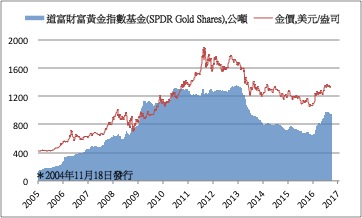
全球最大黃金ETF道富財富黃金指數基金(SPDR Gold Shares, GLD)23日黃金持有量增加0.3公噸至951.216公噸。最大的白銀ETF安碩白銀指數基金(iShares Silver Trust, SLV),白銀持有量增加32.48公噸至11,337.95公噸。
匯豐銀行(HSBC)最新報告表示,美國聯準會維持利率不變之後金價連續兩天上漲,該行認為美聯儲壓住升息決策越久對金價越有利。匯豐對美聯儲12月的升息仍然有所懷疑,但稱若是升息的訊號變得明確,或是美聯儲官員的態度分化,對金價來說都會造成壓力。
布朗兄弟哈里曼公司(Brown Brothers Harriman)則是在報告當中表示,美聯儲本次會議可能是歷來最分歧的一次,聯儲主席葉倫在會後表示年底前升息的可能性已經增強,而有三位委員投下反對票則是近年來最多的一次,與此同時,又有三位委員認為年底前不會升息。
在其他投行的看法方面,法國巴黎銀行(BNP Paribas)表示,美聯儲擺出了已經準備好12月升息的架勢。羅素投資(Russell Investments)表示,最近美國的經濟形勢還不錯但說不上特別好,而中國經濟不穩、英國退歐餘震都在影響著美聯儲的決策,但該行認為12月美聯儲將升息一次,2017年將升息兩次,明年底利率將到1.25%左右。安本資產管理(Aberdeen Asset Management)則稱,原本這次就不太可能升息,本次會議主要為12月及後續的升息定調,而點陣圖顯示12月升息已板上釘釘。
礦業分析機構SNL Metals & Mining發佈報告表示,2016年7-8月,全球金礦產業的探勘支出較去年同期的3.24億美元大增至9.865億美元,主要受到金價上漲的激勵;其中,加拿大佔據了39%的份額,亞太地區也佔有29%的份額。金礦商的資本融資按交易所來看,加拿大多倫多交易所就佔了55%或5.44億美元,其次是澳洲證交所佔據30%份額或2.91億美元。
SNL報告表示,2015年,全球金礦產業的探勘支出合計39.4億美元,佔當年度全球有色金屬(非鐵金屬)探勘支出的45%比重。以平均金價與黃金產量所計算的金礦產業營收,亞太地區與非洲則分佔一、二位,各達到202.2億美元與161.2億美元。從2015年初到今年上半年,金礦產業計劃以及落實投資最多的是拉丁美洲的55.8億美元,其次為美加地區的50億美元。
數據也顯示金礦產業的投資趨向保守,從2006-2015年,金礦商對鄰近現有礦場的探勘投資預算佔比從44%攀升至54%,反觀對於新項目的探勘投資預算佔比則是從40%下滑至22%。就金屬類別來看,2015年黃金的探勘支出年減14%,佔整體有色金屬探勘支出的45%比重;基本金屬則佔據約1/3比重,而鉑族金屬的探勘支出則年減33%。
紐約商品期貨交易所(COMEX)12月期銅9月23日收盤上漲0.3%成為每磅2.2010美元,週線上漲1.9%。(更多黃金圖表)

MoneyDJ 新聞 2016-09-26 07:20:52 記者黃文章 報導

Reference:

引:【新唐人2016年09月24日訊】韓國海運

【新唐人2016年09月24日訊】韓國海運龍頭「韓進海運」從8月底聲請破產以來,資產遭凍結,供應鍊也隨之被拖累。截至今日,仍有許多船員被困在貨輪上。相關業者認為,韓進崩潰對國際金融市場的衝擊如同核彈爆炸,是「雷曼兄弟」的航運翻版。 
韓進京士頓港實習工程師鄭金善:「韓進貨輪上的船員正面臨食物短缺和衛生方面的問題。」

韓進海運(Hanjing Shipping)為全球第7大貨櫃運輸公司,8月31日因財務惡化聲請破產保護。由於各大國際港口擔心拿不到費用,紛紛拒絕韓進入港卸貨。如今貨輪上仍有新台幣約4380億的貨物等待靠岸,船員食物短缺則是更迫切的問題。

韓進摩納哥港員工:「倘若我不得已受困海上,諸如颱風等惡劣天氣會令我最擔心。」

彭博社(Bloomberg)指出,韓國金融監管機構將尋求43個國家開港讓韓進停靠,以防船隻被扣押。自申請破產保護以來,韓進已遭到法院監管,攸關年底購物季的供應鏈也連帶被打亂。

彭博情報員 馬塔爾:「韓進海運對供應鏈的衝擊,影響到零售商和即將到來的聖誕假期;儘管如此,韓進貨輪無法靠岸仍是不爭的事實。」

全球最大貨櫃船租賃公司塞斯潘(Seaspan)執行長王友貴(Gerry Wang),接受彭博社採訪時,則表示:「韓進海運破產就像當年雷曼危機對金融市場造成的打擊,是個巨大的核彈爆炸。不僅撼動整個產業界,更將成為全球轉捩點。」

韓進前董事長日前表示願意出資一百億韓元,協助度過難關;然而根據南韓政府估算,韓進至少還需六千億韓元的資金,才能填補這次的損失。

新唐人亞太電視卓廷威編譯

Reference: 

http://www.ntdtv.com/xtr/b5/2016/09/25/a1288284.html

引: Difference between MTS, MTO, ATO, PTO, CTO & ETO

Difference between MTS, MTO, ATO, PTO, CTO & ETO

It's annoying when you see people talking with terms you don't know or use simplify form to describe some professional terms. I hereby would like to organize my learning specially for these "sounds professional" terms.
As a guy working in logistics industry, let's start in some logistics terms.

Make-to-stock (MTS)
Make-to-order (MTO)
Assemble-to-order (ATO)
Engineer-to-order (ETO)


 Make-to-stock (MTS)
In MTS environments, products are created before receipt of a customer order. Customer orders are then filled from existing stock, and then those stocks are replenished through production orders. MTS environments have the advantage of decoupling manufacturing processes from customer orders. Theoretically, this enables customer orders to be filled immediately from readily available stock. It also allows the manufacturer to organize production in ways that minimize costly changeovers and other disruptions.
However, there are risks associated with placing finished goods into inventory without having a firm customer order or an established need. These risks tend to limit MTS environments to simple, low-variety, or commodity products whose demand can be forecasted readily.

 Assemble-to-order (ATO)
In ATO environments, products are assembled from components after the receipt of a customer order. The key components in the assembly or finishing process are planned and stocked in anticipation of a customer order. Receipt of an order initiates assembly of the customized product. This strategy is useful when a large number of end products based on the selection of options and accessories can be assembled from common components.
When products are too complex or customer demand is unpredictable, manufacturers may choose to hold subassemblies or products in a semifinished state. The final assembly operation is then held until a firm customer order is received. In this environment, manufacturers theoretically cannot deliver products to customers as quickly as MTS environments, since some additional time is required to complete the final assembly.
Make-to-order (MTO)
In MTO environments, products are made entirely after the receipt of a customer order. The final product usually is a combination of standardized and custom items to meet the customer's specific needs. MTO environments are more prevalent when customers are prepared to wait in order to get a product with unique features—usually customized or highly engineered products. This is analogous to the difference between a fast-food restaurant and a full-service chain restaurant. MTO environments are slower to fulfill demand than MTS and ATO environments, because time is required to make the products from scratch. There also is less risk involved with building a product when a firm customer order is in hand.
Engineer-to-order (ETO)
In ETO environments, customer specifications require unique engineering design, significant customization, or new purchased materials. Each customer order results in a unique set of part numbers, bills of material, and routings. ETO environments theoretically are the slowest to fulfill: Time is required not only to build the product, but to custom design it to meet the customer's unique requirements.


Assemble to Order (ATO) and Pick to Order (PTO) are stocking strategies that are used by manufacturers, when they can produce a variety of finished products from a relatively small number of subassemblies and components. This stocking strategy is widely known as the “hourglass” strategy, where you maintain your inventory at the narrowest level in your bill structure. This maintains inventory in a more flexible state and helps minimize your inventory investment. An ATO environment is where you wait until you have an actual sales order before you begin manufacturing the finished product. PTO implies that you will pick multiple items based on one line item on a sales order.

Configure To Order Environment


In both ATO and PTO environments you might actually configure products based on the customer order, or simply manufacture or ship standard products or predefined configurations. A configure to order environment is where you allow your customers to configure the finished product that they intend to buy. Typically you will offer a variety of choices to your customer from which they can choose the best options that suit them.

Market Orientation versus Stocking Strategies

Whether you offer configurable products depends on your market orientation; but if you do, you cannot follow a Make to Stock strategy. You will potentially follow one of the three possible stocking strategies—Make to Order (MTO), ATO, or PTO, depending on the complexity of your products (how configurable your products are). On the contrary, you can operate with an MTO/ATO/PTO stocking strategy but still choose not to offer configurable products. The difference between MTO and ATO is the level at which you stock your components. So, from here on, when we mention ATO we really mean both ATO and MTO because the business processes are similar albeit the stocking levels are different.

ATO/PTO Scenarios

In a configuration scenario, a model bill of material is used to represent the list of choices; if there’s no need to offer choices, a standard bill of material is used. The difference between models and items is essentially the ability to configure an item while creating an order. Beyond this creation of the configuration item, the manufacturing and distribution processes are the same for both models and standard items

In an ATO environment, the strategy is to forecast, build, and stock the subassemblies and parts that are used in the model. Oracle offers two flavors of ATO—the first one is the ATO model in which the customers can configure the product to their liking, and the other one is the ATO item that is preconfigured. Once the customer order is received, the subassemblies and components are assembled, according to the instructions in the routing, and shipped.

For configurable models, the subassembly/component list will vary with respect to each order and so will the manufacturing instructions (routing). So, a notional item is created for each unique combination of options using an automatic process. This item can be numbered and named according to your business needs. For example, when a model called MD45890 is ordered with a set of chosen options, the system will create a notional item to represent the chosen options, and numbers the new item as MD45890*99, based on your BOM parameters. This item is referred to as the configuration item in Oracle Applications.

The strategy in PTO is similar, although there is no manufacturing. There are two flavors of PTO as well—PTO models that can be configured by the customers and PTO kits that are ordered as they are. Because there is no manufacturing involved, PTO models or PTO kits can be shipped as soon as they are ordered, depending on the availability of the required items. When the pick list is generated for these items, the individual items that were selected (in the case of a PTO model) or that were part of the standard PTO kit will be printed in the pick list, which can then be picked and shipped.

 Oracle allows you to have hybrid items such as an ATO model within a PTO model. Starting with Release 11i5, Oracle supports multiple levels of configuration within a model; the applications will generate a unique configured item for each ATO model within a structure. Prior to Release 11i5, however, multiple ATO models could be used, but the result was one flat bill of material for all levels of configuration in the structure.